
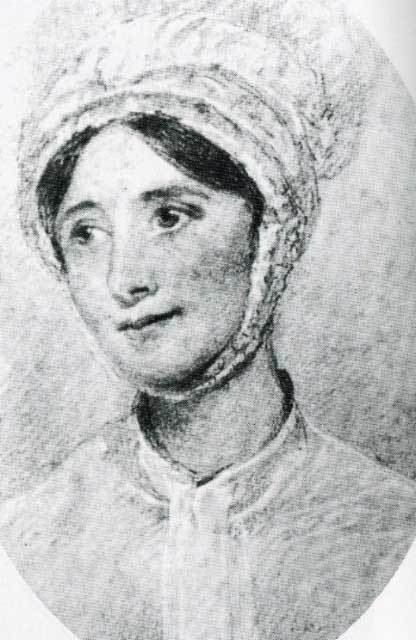
Cassandra Austen
Miss Austen: The BBC Series asks us to consider if Jane Austen’s novels really do have happy endings
Cassandra Austen. Literary vandal. Prude. Spinster. Cassandra is known as the sister who refused to let the world see into the mind of the great Jane Austen when she burned her letters, fearing that her sister’s acerbic wit would offend their neighbours. Is it possible there was more to her story? The BBC series, adapted from from Gill Hornsby’s novel, Miss Austen, by Andrea Gibb, puts forward some plausible ideas.
There is a striking scene in the BBC’s new miniseries Miss Austen when we see Jane’s sister, Cassandra reading Persuasion to Isabella, a young single woman whose family were close friends with the Austens. Also present is Mary, Cassandra and Jane’s overbearing sister-in-law. Mary objects to the reading of the novel, but Isabella insists she must find out if Anne Elliot, Persuasion’s protagonist, marries in the end, if it has a happy ending, especially since Anne is of an age to be thought ‘an old maid’ (27). Persuasion was published in 1818 soon after Jane’s death in 1817, and Jane, although long dead by the time of the action of the series, haunts every scene.
“Is that the only happy ending possible?’ asks Cassandra.
“Yes,” replies Isabella.
Cassandra, a single lady in late middle age, opines that there are a lot of opportunities for ‘women like us’. Mary replies, ‘Are there?’
That gives us the central theme of this tale of Cassandra- not Jane – Austen and her struggles as what Jane in a flash back scene calls ‘the dutiful spinster aunt’. It’s a very uncomfortable subject bravely tackled by a fine group of actresses including Keeley Hawes as the older Cassandra and Rose Leslie as Isabella. It reminds us of the central irony of Jane Austen’s works: whilst the fictional version of Cassandra tells us that all there is to know about Jane is to be found in her novels, all her heroines bar none marry and escape the terrible fate of spinsterhood, whilst Jane and her sister did not.
The series is at pains to make it clear that to fail to secure a marriage was a disaster for a nineteenth century woman. Jane tells Cassie, ‘we will be pitied… or worse face derision’. The action moves between Cassandra’s older years and her youth with Jane. We see her bereaved of her fiancé Tom Fulwar to whom she makes a rash vow that she will never marry again. Later she finds another suitor and Jane tells her that if she is given the chance to ‘secure her future’, she must do so. Jane mistakenly believes that Cassie rejects a secure future because of her vow to Tom, whereas in reality she does not want to leave Jane. Cassandra for her part ironically states that she and Jane have 2 living parents and 4 brothers to take care of them, unaware that her father will die and one of those brothers will evict them from their home. In reality the Austen brothers did support their mother and sister for a time but ran out of the funds to do so. The female Austens eventually moved to the village of Chawton to reside near Cassie and Jane’s brother, Edward. Jane died and Cassandra and Cassandra Senior, the matriarch of the family, lived with a family friend who eventually moved out to get married. When her mother died, Cassandra was left living alone.
Marriage, then, is not about romance alone and Jane Austen was acutely aware of that. In Emma, when the interfering, wealthy young matchmaker Emma Woodhouse passes an unkind remark to the older spinster, Miss Bates, she is chastised by her later partner Mr. Knightley as Miss Bates is ‘poor’. Poverty and singleness were often associated in a society where women could not earn a living except by teaching or domestic service. In Miss Austen, we see Beth, Isabella’s sister, achieve such a thing but we are made aware that this is unusual. Cassandra visits both Isabella’s sisters desperately trying to settle her future as she is on the brink of forever leaving her family home for an unknown future, which, almost as if Jane had written her life story, becomes much more secure when her failed romance with the local doctor rekindles and so she has her happy ending.
Cassie does not have a happy ending, but through her reading of Jane’s letters she reconciles with her past. It’s a story worthy of not a few tears on the way, and for more than one of the women shown on screen whose real life counterparts faced so much sorrow.
There is a mistaken belief that Jane Austen broke the mould and earned her own living through her writing. Despite the fact she is probably one of the most successful novelists in history, she made relatively little money in her life and was not treated well by publishers of her work. She made only £45,000 in today’s money for her work in her lifetime, which over decades was hardly enough money to support a household. Cassandra had inherited money from Tom and was relatively financially independent. Despite her financial need Jane held on to some ideas of romance in marriage, writing to her niece Fanny Knight:
And now, my dear Fanny, having written so much on one side of the question, I shall turn round and entreat you not to commit yourself farther, and not to think of accepting him unless you really do like him. Anything is to be preferred or endured rather than marrying without affection; and if his deficiencies of manner, &c. &c., strike you more than all his good qualities, if you continue to think strongly of them, give him up at once…
The BBC series depicts Jane’s depression or ‘sadness’ as resulting from the lack of recognition of her work that she would have liked to have seen and her feeling of not having achieved all she was capable of rather than her marital status. Afterall, how could she have been lonely when she had her Cassie?
In the 21st century, are we more enlightened? How do we view independent women today? J.D. Vance’s recent remarks on ‘childless cat ladies’ imply that the Western world may have moved on in terms of the education and opportunities afforded women, but a woman flying solo is still met with ‘derision’. From Bridget Jones to Ally McBeal, the only happy ending for a fictional single lady is to find a man. Perhaps box office receipts would fall with any other ending, and so the BBC is to be applauded for telling Cassie’s story – that of a woman who lived a life of duty with great difficulty as did many other women before her and since. Cassie is shown to have chosen her life, and quite often she seems to have actually enjoyed her sexless, spinster existence. Nevertheless, she burns many of Jane’s letters (around two thirds is the current estimation) to preserve the romantic memory of Jane, because sadness, like singleness, is to remain unspoken.
Join our video course Discovering Jane Austen.
Join our course on Women in Literature.
 Online English Literature Courses