Fact and Fiction: No Tale Comes from Nowhere
When you teach online, you are often at the mercy of online reviews. One that really perturbed me was the student who posted that my English Literature course was full of ‘irrelevant biography’. As a historicist literary critic, I feel that the real world with its prevailing beliefs, attitudes and problems at the time a text was written is bound to be part of the story. In the case of the authors we are about to examine, their own lives quite movingly appear in their writing. In essence, writing comes from the soul, and what that soul has seen will often appear on the page.
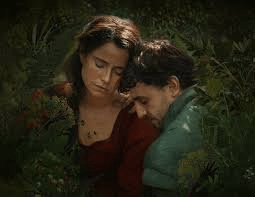
Recently there has been a very successful movie adaptation of Maggie O’Farrell’s novel Hamnet. We don’t have enough information about the Shakespeare family’s home life to know how accurate a depiction the novel is, but its memorable dénouement suggests that whilst Shakespeare seemed an absent father more interested in his career than his wife and children, that they were always on his mind and this was reflected in his art. Scholars may not see it this way, with the sources for Hamlet considered to be a 1570 translation of Saxo Grammaticus’ twelfth century Gesto Danorum (Gesture of the Danes) and a lost play entitled the Ur-Hamlet, possibly written by Thomas Kyd. The striking similarity between the names Hamlet and Hamnet (Shakespeare’s son) does seem to create a link between the loss of Shakespeare’s child and the death focused play that now tops the English literature cannon. The movie points out that these names were interchangeable in Renaissance England.
What we may be missing here is another life story, that of Hamnet author Maggie O’Farrell. Like the Shakespeare children, Maggie’s father’s career dictated much of his family’s life. Born 50 miles north of where I live in Northern Ireland, she moved to Wales at a young age when her father was offered a job lecturing economics at the University of Wales. Like Agnes in the novels, she felt she didn’t fit in saying that, ‘In Britain I felt Irish and in Ireland I felt British’. In common with Hamnet’s younger characters, O’Farrell suffered a serious illness in childhood, developing encephalitis at the age of eight which caused her to miss a whole year at school. Her 2017 memoir I Am, I Am, I Am described near death experiences which she and her children experienced. Did those lead her to sympathise with Agnes, or to create Agnes, who could never be a true depiction of Anne Hathaway? Perhaps it also helped her to lovingly draw the endearing character of Hamnet, too.
Ofcourse, it could also be that a study of English Literature at Cambridge contributed to the novel and all these things have become combined in what J.R.R. Tolkien called ‘the soup’ of a story, all the ingredients that mix together and cannot be easily separated.
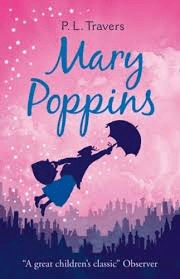
Childhood experiences appearing in the work of adult authors is a common phenomenon. The film Saving Mr. Banks depicts how P.L. Travers, the creator of the Mary Poppins novels, was very possessive of her work because it contained within it a great wound from her early years. She had been close to her father who was an alcoholic, but he became erratic and borderline abusive and eventually died of his illness. During his final days she was looked after by an aunt with a carpet bag, whose catchphrase was ‘spit spot’. The movie suggests that the story of Mary Poppins is essentially Travers using her imagination to try and redeem the memory of her father, in the same way as Mary Poppins’ time with the Banks children restores Mr. Banks to a closer relationship with his family. In one moving scene in the film, Walt Disney remarks to Pamela Travers that Mary is there to save the children. She replies, ‘It’s not the children she is there to save’ (hence Saving Mr. Banks). Maybe what she was trying to save was her affection for her father, blighted by his condition and his loss.
The loss of a parent in real life who is miraculously saved in fiction is also found in the works of C.S. Lewis. In The Magicians’ Nephew, Digory’s mother is depicted as suffering from a terminal illness. She is eventually healed by Aslan. C.S. Lewis’ childhood story did not have such a happy ending. As he relates in his ‘spiritual autobiography’, Surprised by Joy:
There came a night when I was ill and crying… and distressed because my mother did not come to me…And then my father, in tears, came into my room and tried to convey to my terrified mind things it had never conceived before… My father never fully recovered from this loss.
… Under the pressure of anxiety his temper became incalculable; he spoke wildly and acted unjustly.
Jack Lewis was only 10 years old when his mother died. His father, focused on his own career and routine, sent his son from the part of Belfast where I also grew up to boarding school in England. The headmaster was abusive and mentally unstable, and the school eventually closed. It can’t have been a happy childhood, and yet it contained within it the inspiration for a magical land:
I am a product of long corridors, empty sunlit rooms, upstair indoor silences, attics explored in solitude, distant noises of gurgling cisterns and pipes, and the noise of wind under the tiles. Also, of endless books. (Surprised by Joy)
Perhaps from these endless books, his conversion from atheism to the Christian faith, the influence of his close friend, J.R.R. Tolkien and his own life came this moment in The Magicians’ Newphew:
Then Digory took a minute to get his breath, and then went softly into Mother’s room. And there she lay, as he had seen her lie so many other times, propped up on the pillows, with a wan, pale face that would make you cry to look at it. Digory took the Apple of Life out of his pocket.
And just as the Witch Jadis had looked different when you saw her in our world instead of in her own, so the fruit of that mountain garden looked different too. There were of course all sorts of coloured things in the bedroom; the coloured counterpane on the bed, the wall-paper, the sunlight from the window, and Mother’s pretty, pale blue dressing jacket. But the moment Digory took the Apple out of his pocket, all those other things seemed to have scarcely any colour at all. Everyone of them, even the sunlight, looked faded and dingy. The brightness of the Apple threw strange lights on the ceiling. Nothing else was worth looking at: indeed you couldn’t look at anything else. And the smell of the Apple of Youth was as if there was a window in the room that opened on Heaven.
“Oh, darling, how lovely,” said Digory’s Mother.
“You will eat it, won’t you? Please,” said Digory.
“I don’t know what the Doctor would say,” she answered. “But really—I almost feel as if I could.”
He peeled it and cut it up and gave it to her piece by piece. And no sooner had she finished it than she smiled and her head sank back on the pillow and she was asleep: a real, natural, gentle sleep, without any of those nasty drugs, which was, as Digory knew, the thing in the whole world that she wanted most. And he was sure now that her face looked a little different. He bent down and kissed her very softly and stole out of the room with a beating heart; taking the core of the apple with him. For the rest of that day, whenever he looked at the things about him, and saw how ordinary and unmagical they were, he hardly dared to hope; but when he remembered the face of Aslan he did hope.
That evening he buried the core of the Apple in the back garden.
Next morning when the Doctor made his usual visit, Digory leaned over the bannisters to listen. He heard the Doctor come out with Aunt Letty and say:
“Miss Ketterley, this is the most extraordinary case I have known in my whole medical career. It is—it is like a miracle. I wouldn’t tell the little boy anything at present; we don’t want to raise any false hopes. But in my opinion——” then his voice became too low to hear.
There are magical apples here but also drugs and a need for sleep – in this passage hope and pain meet, as do fact and fiction.
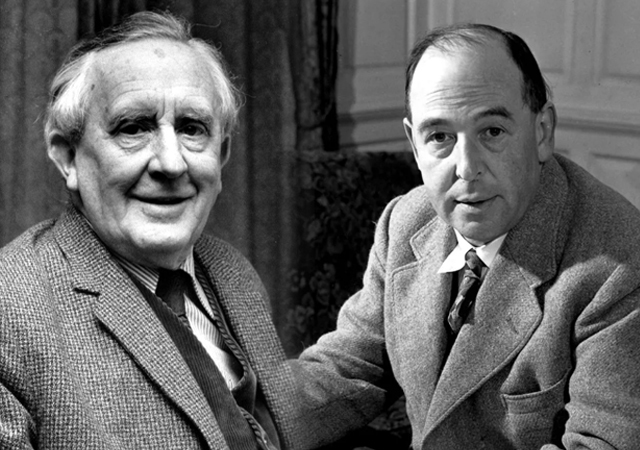
J.R.R Tolkien with C.S Lewis
It is interesting that Digory’s mother is named Mabel. That was not Lewis’ mother’s name. She was called Florence. It may be a reference to Mabel Tolkien, the mother of Lewis’ cherished friend, John Ronald Reuel Tolkien, who happened to be Lewis’ boss in the English Literature department at Oxford.
Mabel may be remembered by posterity as the mother of a very famous son, but she was a fascinating woman in her own right. She died when Tolkien was only 12, and this early loss of a mother was something that he shared with Lewis and might have been the reason that Lewis seems to refer to it.
Mabel had two sons, John Ronald and Hilary. She was living in South Africa when her eldest son was only 3 years old and decided to travel back to her native England to visit her family with the boys. While she was away her husband died. Economic opportunities were limited for women in 1895, and so she was reliant on family for support. The problem was that her family vehemently objected to her newfound Catholicism and cut her off, penniless. It was with the help of the church that her intelligent elder son was educated. She had taught him to love languages and mythology, so much so that he would create these himself later in life. When Mabel died of type 1 diabetes aged 34, her son clung to her Catholicism, which would be a fundamental part of his life and writings. In a letter, Tolkien said:
My own dear mother was a martyr indeed, and it is not everybody that God grants so easy a way to his great gifts as he did to Hilary and me, giving us a mother who killed herself with labour and trouble to ensure us keeping the faith.
In the trenches of World War I, Tolkien attended mass every day. There he began composing the legendarium which would be his enduring legacy.
With Lewis’ endorsement in The Times, Tolkien released some small part of his imagination in a story he had composed for his children, The Hobbit. Its sequel, The Lord of the Rings, is a much darker, more adult work. The women in The Lord of the Rings, and The Silmarillion (which Tolkien considered his magnum opus), are often incredibly powerful if somewhat distant.
In a letter to a family friend, Rev. Robert Murray, dated 2nd December 1953, Tolkien responds to Murray’s comments that the figure of Galadriel is reminiscent of the Virgin Mary by saying:
The Lord of the Rings is ofcourse a fundamentally religious and Catholic work, unconsciously so at first but consciously in the revision. That is why I have not put in, or have cut out, practically all references to anything like ‘religion’, to cults or practices, in the imaginary world. For the religious element is absorbed into the symbolism.
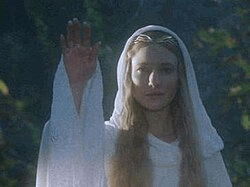
Galadriel and Varda (aka Elbereth) are figures of immense power, as is Melian. Perhaps the powerful influence of Mabel in shaping Tolkien’s intellect and imagination is also at play, and Catholicism provided connection with her. She and her sons were all part of the Communion of Saints. Unlike Lewis, Tolkien did not rewrite his mother’s story. He revered it as it was.
Other elements of real life that crept into Lord of the Rings include Lewis’ booming voice reflected in the character of Treebeard. Lewis similarly included his friend in his writing, with Elwin Ransom of the Cosmic Trilogy being a philologist (a scholar of languages, a word often applied to Tolkien) whose name means ‘Elf lover’. It came then as a bit of a jolt when Lewis described this figure as ‘a member of the intelligentsia on holiday’ in Out of the Silent Planet.
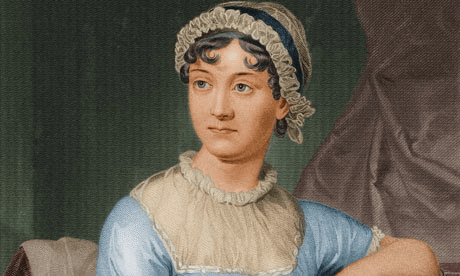
Jane Austen
Tolkien and Lewis delighted in writing fantasy. Other authors exulted in basing their works upon their social reality, and the most notable is probably Jane Austen. It is thought that the 160 letters written by Austen still extant are a remnant of around 3000 letters, most of which were burned by Jane’s sister, Cassandra, after her death incase her nieces read them and repeated their acerbic remarks about the neighbours.
Her unflattering depictions of human behaviour are often what gives her novels a sense of realism. Lady Catherine de Burgh, Mr. Collins and Fanny Dashwood are odious, but they are realistically odious. You may be unfortunate enough to be acquainted with individuals who possess similar traits.
There is another autobiographical element which may have influenced Austen as a pioneer of literary realism other than her own penchant for observation. In 1797, Jane met her cousin and future sister-in-Law, Eliza de Feuillide, whose first husband had been guillotined in the French Revolution. Austen retained a lifelong horror of the French Revolution which was part of her objection to sensibility. Sensibility (in Austen’s view, the opposite of sense) was a literary movement typified by writers such as Samuel Richardson whose novel Pamela exemplifies the genre. It sees heroines swooning and fainting etc. It was very focused on the individual rather than society and as such tallied with the ideals of the French Revolution. Intellectually and morally, Austen’s innocent but earthy heroines provided an alternative to Richardson’s saintly fainters.
In one area, Austen’s novels don’t seem that realistic and that is when it comes to courtship. She has been accused of repeatedly telling Cinderella stories of implausible matches between financially vulnerable women and wealthy men. In real life, Austen’s greatest romance was with a lawyer called Thomas Lefroy, whose parents sent him away to separate the young couple as a match with Jane would have been economically imprudent. Jane was very well aware that marriage was a financial arrangement, although in 1814 she wrote to her niece, Fanny Knight, who had asked for advice on a relationship, ‘Anything is to be preferred or endured rather than marrying without Affection.’
In a business sense Austen’s heroines marry well, especially Elizabeth Darcy née Bennet who becomes mistress of the vast estate of Pemberley after her union with Mr. Darcy. Jane’s life was very different. Her niece, Anna Austen, described her aunts’ days as “a very quiet life, according to our ideas, but they were great readers, and besides the housekeeping our aunts occupied themselves in working with the poor and in teaching some girl or boy to read or write.” Sometimes fiction comes from fact, and sometimes from what fact could have been.
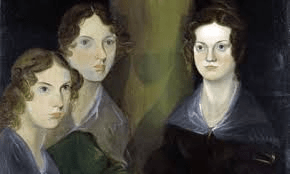
Anne, Emily and Charlotte Brontë
If Jane Austen is associated with literary realism and her characters came from shops, parlours and ballrooms, the Brontë sisters’ writing often comes from the world of imagination. For many years readers have wondered how these three sisters, who grew up in a remote village parsonage, wrote Gothic tales like Jane Eyre and Wuthering Heights or delved into the gritty realities of alcoholism and domestic abuse in The Tenant of Wildfell Hall. The themes of their work definitely did not come from a vacuum.
Charlotte, Emily and Anne Brontë were part of a family of six siblings. They were born in 1816, 1818 and 1820 respectively. They knew tragedy very early in life when their mother died in 1821 of uterine cancer. It is unlikely that Emily and Anne had many memories of her. Tragedy struck again in 1825. Their two eldest sisters, Maria and Elizabeth, suffered cold, hunger and deprivation at Cowan Bridge School, returning home with tuberculosis from which they both died, aged 11 and 10.
Raised in the seclusion of their father’s parsonage at Haworth in Yorkshire, the surviving sisters were very widely read and much influenced by the contemporary literary trend of romanticism. Charlotte remarked, “For fiction, read Walter Scott and only him. All novels after his are without value.”
They had started writing stories and poems in childhood. Their knowledge of literature is intermingled with elements of their own lives quite often. Anne based Agnes Grey on her experiences as a governess. Villette contains elements of Charlotte’s crush on her professor when she had studied in Belgium. The Tenant of Wildfell Hall, considered shocking in its day (especially by Charlotte), may have drawn some of its raw depiction of an abusive home life from the alcohol addiction suffered by Branwell Brontë, the brother who also lived in the Haworth parsonage.
One of the most memorable life-based scenes in the sisters’ work is Charlotte’s depiction of the red room in Jane Eyre. It is possibly not based on her own life, but the traumatic school experiences suffered by her elder sisters before their deaths, which had badly affected Charlotte.
Here is an abridged look at the scene, which can be found in Chapter 2:
“What we tell you is for your good,” added Bessie, in no harsh
voice, “you should try to be useful and pleasant, then, perhaps, you
would have a home here; but if you become passionate and rude,
Missis will send you away, I am sure.”
“Besides,” said Miss Abbot, “God will punish her: He might strike
her dead in the midst of her tantrums, and then where would she go?
Come, Bessie, we will leave her: I wouldn’t have her heart for
anything. Say your prayers, Miss Eyre, when you are by yourself;
for if you don’t repent, something bad might be permitted to come
down the chimney and fetch you away.”
……..
This room was chill, because it seldom had a fire; it was silent,
because remote from the nursery and kitchen; solemn, because it was
known to be so seldom entered. The house-maid alone came here on
Saturdays, to wipe from the mirrors and the furniture a week’s quiet
dust: and Mrs. Reed herself, at far intervals, visited it to review
the contents of a certain secret drawer in the wardrobe, where were
stored divers parchments, her jewel-casket, and a miniature of her
deceased husband; and in those last words lies the secret of the
red-room–the spell which kept it so lonely in spite of its
grandeur.
The modern word for the behaviour of Jane’s guardians would be ‘gaslighting’, as they piously rebuke her childish rebellion as if it were criminal and then lock the young girl in a room where there had fairly recently been a death. The fear felt by the child really comes through, and the horror of her surroundings. There is a great sense of injustice in the passage, which may reflect Charlotte’s feelings towards the harsh treatment of Maria and Elizabeth at Cowan Bridge. In a way, we could read the red room passage as a defence of her lost sisters.
We have looked at a selection of writers whose lives and works intermingle. In a human sense, I wonder what would have happened to these authors had they not had the outlet of writing for the trauma they had endured. In an academic sense, I hope I have drawn a simple picture of how knowledge of history, and specifically the life of an author, casts a text in a new light. I would not have been so sad at the end of The Magician’s Nephew had I not known that C.S. Lewis’ own mother had died when he was Digory’s age, and he, like Digory, became a scholar.
Perhaps you might think of putting something of your own soul on the page, too, even if only to see what it looks like there.
—
Texts
Many of these texts are available for free on Project Gutenberg, although more recent texts may require a purchase.
On Fairy Stories by J.R.R Tolkien
Surprised by Joy by C.S. Lewis
The Magician’s Nephew by C.S. Lewis
The Lord of the Rings by J.R.R Tolkien
The Cosmic Trilogy by C.S. Lewis
The Inklings by Humphrey Carpenter
Pride and Prejudice by Jane Austen
Sense and Sensibility by Jane Austen
Wuthering Heights by Emily Brontë

